
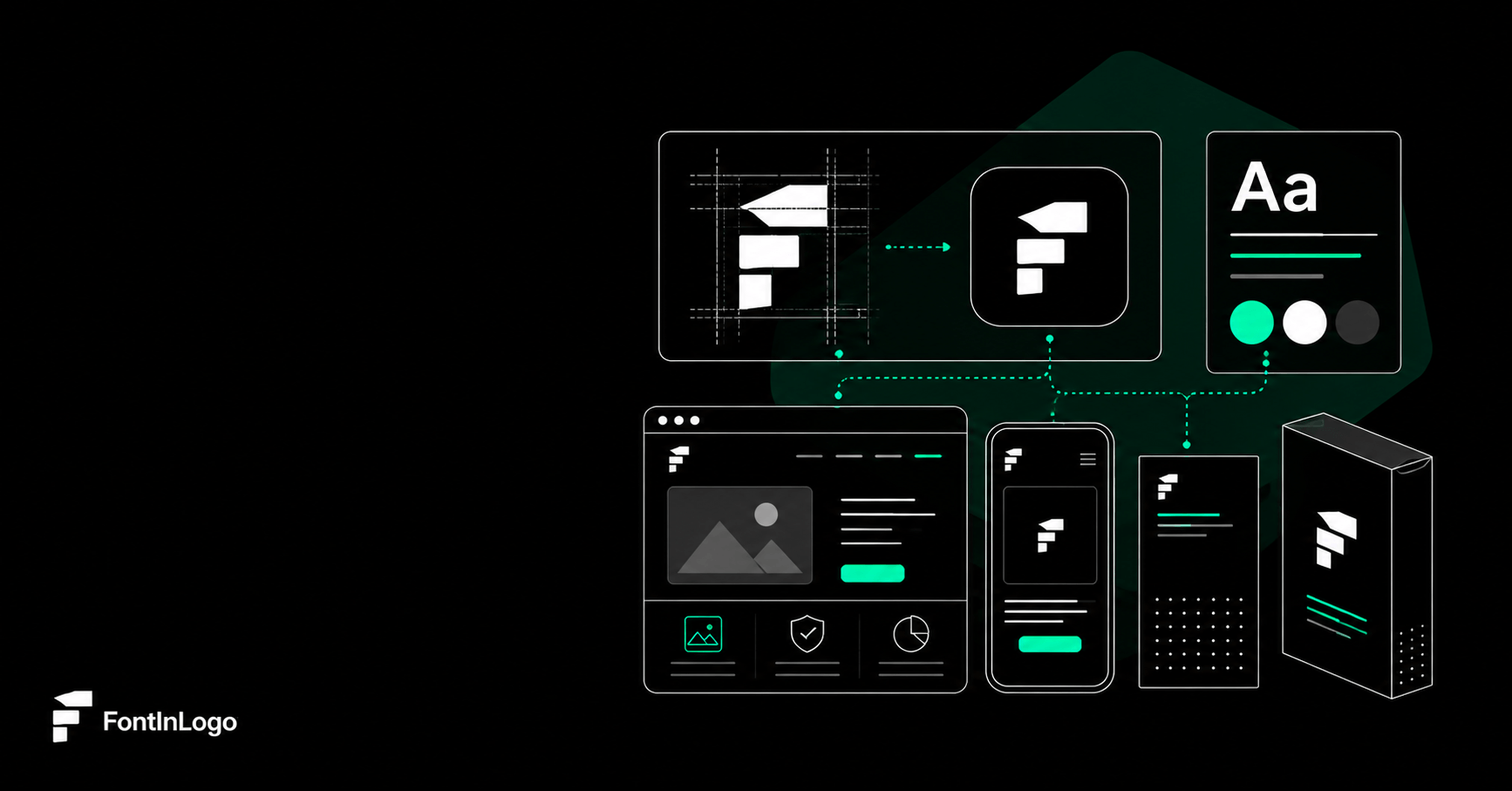
A logo can be excellent and still not carry a brand. The mark, the wordmark, the carefully chosen typeface, these are where brand identity usually begins, but they are rarely where it is won or lost. What creates recognition over time is the accumulated effect of hundreds of smaller visual decisions: how product images are lit, which fonts appear in campaign banners, how much white space surrounds an icon, and whether the tone of one social post matches the tone of the next.
When those decisions are inconsistent, even a strong logo cannot compensate.
What a logo actually does
A logo identifies. It creates an initial association between a name and a visual mark. But identification is only the first layer of what a brand needs to accomplish.
Recognition, the ability to spot a brand before the logo is visible, through typography alone, colour alone or image style alone, comes from repetition across a system. That system includes the typefaces used in headings and body copy, the colour palette applied across interfaces and print, the visual weight of icons, the style of illustration, and how photography tends to be composed and lit.
Font In Logo's own focus on the typographic component of brand identity points to this reality: the fonts in a logo and the fonts used across a brand's communications are part of a continuous visual language, and when they diverge without intention, the identity weakens.
The gap between the logo and everything else
The brands that feel most coherent are those in which the visual logic established in the logo identity runs consistently through every other layer. The ones that feel slightly off often have a polished logo system sitting alongside product images, campaign graphics, or website visuals that could belong to a different company.
For product-led businesses, consistency often starts with having accurate digital assets that can support campaigns, e-commerce pages, and launch materials across channels; this is where a specialised 3d product modeling company may become part of the broader visual identity workflow. A skincare brand that can deploy the same product asset across its website, its retail partner pages, its paid ads, and its catalogue materials has a different kind of visual coherence from one that photographs the product separately for each context. The product looks the same everywhere. That sameness is a form of brand signal.
The e-commerce product card, the launch banner, and the campaign graphic are places where brand identity is tested in the real world, and they are often the last places it gets properly documented.
Image style as part of the system
Photograph a product against a white background with sharp studio lighting, then photograph the same product in a lifestyle setting with warm ambient light and soft shadows, and put both on the same page. They will not feel like the same brand even if the logo is identical in both.
Image style is a brand decision. The choice between clean and atmospheric, between minimal and contextual, between product-first and lifestyle-first, communicates something about the brand's personality. A fashion accessories brand with a restrained, high-contrast image style is making a different claim about itself than one that leads with candid, loose, ambient photography. Both are valid. The mistake is choosing without acknowledging that it is a choice, or making it differently across different channels.
Defining this in the brand documentation not just noting "photography: lifestyle and product" but specifying angle conventions, background preferences, lighting character, and how close-up and detail shots are handled, gives the whole team something to align around.
Assets and how to evaluate them
Growing brands tend to develop visual fragmentation. A new campaign is produced in a slightly different style from the existing one. A new product line is launched with photography that does not quite match the rest of the catalogue. A partner or agency produces materials that are on-brand in colour and typeface but feel tonally different everywhere else.
Part of the solution is reusable asset infrastructure: templates that embody the brand's visual logic, a shared library of approved components, and clear guidelines for anyone producing materials who was not in the original brand development conversations. When designers need references, mockup assets, or starting points for digital product presentation, reviewing the best 3d model website options can help them understand what kinds of assets are available and how quality differs across libraries. Understanding the range of what exists and what quality benchmarks look like at different levels helps teams make better decisions when sourcing or briefing assets for new projects.
Template systems, icon libraries, presentation component sets, and defined product visual standards all serve the same function: they reduce the number of decisions that need to be made from scratch each time, and they ensure that the decisions which do get made tend to stay within the system.
The style guide as a living document
Most brand guidelines cover logos, typefaces, and colours. Fewer extend into imagery treatment and product visual standards. For product companies, this is where the gap tends to open.
A complete brand guide for a product-led brand should include rules for how products are photographed or rendered, what backgrounds and lighting conditions are approved, how variants and colour options are presented consistently, and what the output should look like across different channels, not as a rigid specification for every image, but as a set of parameters that keep the brand recognisable across all of them.
This is the same principle that Font In Logo's typography resources address: the difference between knowing which font is used in a logo and understanding how that typeface family should extend across the brand's full communications. A logo font and a body text font are in a relationship. A hero product image and a campaign banner are in a relationship. Defining those relationships is what turns a collection of brand assets into an actual system.
Coherence without sameness
Consistency does not mean making every image identical or every campaign feel like a template. Brands that interpret this literally end up with something that feels stiff a visual identity that cannot adapt to different contexts or creative directions without feeling like it has broken its own rules.
The goal is a recognisable logic: the sense that even when the specific choices differ, they are being made by the same hand, with the same priorities, in the same direction. A skincare brand can have a campaign that is warmer and more narrative than its standard product imagery without the campaign feeling inconsistent as long as the typography, the colour palette, the general composition sensibility, and the product presentation still feel related to everything else the brand produces.
Building brand identity beyond the logo is largely a documentation and discipline problem. The visual decisions that create recognition across product pages, campaign materials, digital assets, and launch imagery need to be as clearly defined and as deliberately maintained as the logo and typeface rules that sit at the centre of the system.